A Complete Guide to the Insurance Sector: Overview, Eligibility, Benefits & Application Process

A Complete Guide to the Insurance Sector
A Complete Guide to the Insurance Sector: The insurance sector plays a crucial role in the modern financial ecosystem, offering protection against unforeseen events through legally binding agreements known as insurance contracts. At the heart of this industry is the principle of risk-sharing. One party, typically the insurer, assumes the responsibility of covering financial losses from uncertain events, such as accidents, illnesses, or property damage. In return, the other party, the insured or policyholder, pays a premium—usually on a monthly or yearly basis. This model ensures financial stability for individuals and businesses when emergencies arise.
Over the decades, the insurance industry has evolved dramatically, incorporating new technologies, actuarial science, and global partnerships. While traditionally considered a slow-moving but stable sector, modern insurance companies are now investing in digital transformation, data analytics, and fintech collaboration to enhance customer experience and risk evaluation. Additionally, the industry has seen innovations in specialized insurance offerings, such as cyber insurance, climate-related insurance, and health tech-based policies, thereby expanding its reach and significance.
From a financial perspective, insurance companies operate in a unique space. They collect premiums from policyholders and then reinvest that money into various financial markets until claims are made. This investment income, known as “the float,” allows insurers to increase their profitability while maintaining sufficient reserves to cover claims. Insurance providers also collaborate with banks through models like bancassurance, particularly popular in Europe and gaining traction in the U.S., where banks offer insurance products directly to their customers, combining financial services under one roof.
Who Can Apply for Insurance?
Insurance is designed to be inclusive and is available to:
- Individuals seeking health, life, auto, or property insurance.
- Families wanting comprehensive coverage plans.
- Business owners requiring commercial insurance for assets and employees.
- Self-employed professionals like freelancers and consultants.
- Students, especially for travel or health insurance while studying abroad.
- Senior citizens, through special life or health insurance plans tailored to older demographics.
Generally, the eligibility criteria include being of legal age (18+), proof of identity and residence, and a declaration of any pre-existing conditions for health-related policies. Some insurance companies also require medical tests or financial proof, depending on the policy type.

Insurance Fees: What You Need to Know
Insurance fees or premiums vary depending on several key factors:
| Type of Insurance | Average Premium Range (Annual) | Factors Influencing Cost |
|---|---|---|
| Life Insurance | ₹5,000 – ₹50,000+ | Age, health, tenure |
| Health Insurance | ₹7,000 – ₹30,000+ | Age, medical history |
| Vehicle Insurance | ₹2,000 – ₹20,000+ | Vehicle type, location |
| Property/Home Insurance | ₹2,500 – ₹15,000+ | Property value, coverage |
| Travel Insurance | ₹500 – ₹5,000+ (per trip) | Trip length, destination |
Premiums are higher for those with higher associated risks. For instance, smokers may pay more for life insurance, while cars driven in accident-prone areas attract higher vehicle insurance premiums.
How to Use Insurance Effectively
To maximize your insurance benefits:
- Understand Your Policy: Read the terms and conditions thoroughly, especially what is included and excluded.
- File Claims Promptly: In case of an incident, inform your insurer immediately and provide the required documents.
- Maintain Records: Keep all premium receipts, medical reports, or bills handy for future reference.
- Review Annually: As life situations change, update your insurance policy accordingly—e.g., after marriage or childbirth.
- Utilize Riders/Add-ons: Customize your plan with add-ons like critical illness cover, accident cover, or maternity cover.
Also read: Best Medicare Supplement Insurance in 2025

Benefits of Having Insurance
Insurance offers several advantages, including:
- Financial Security: Covers large, unexpected expenses like hospital bills or car repairs.
- Peace of Mind: Knowing that your loved ones and assets are protected.
- Tax Benefits: Most premiums are eligible for tax deductions under sections like 80C and 80D of the Income Tax Act in India.
- Wealth Creation: Some policies, like ULIPs and endowment plans, also act as investment tools.
- Business Continuity: Protects businesses from liabilities, theft, or property damage.
How to Apply for Insurance
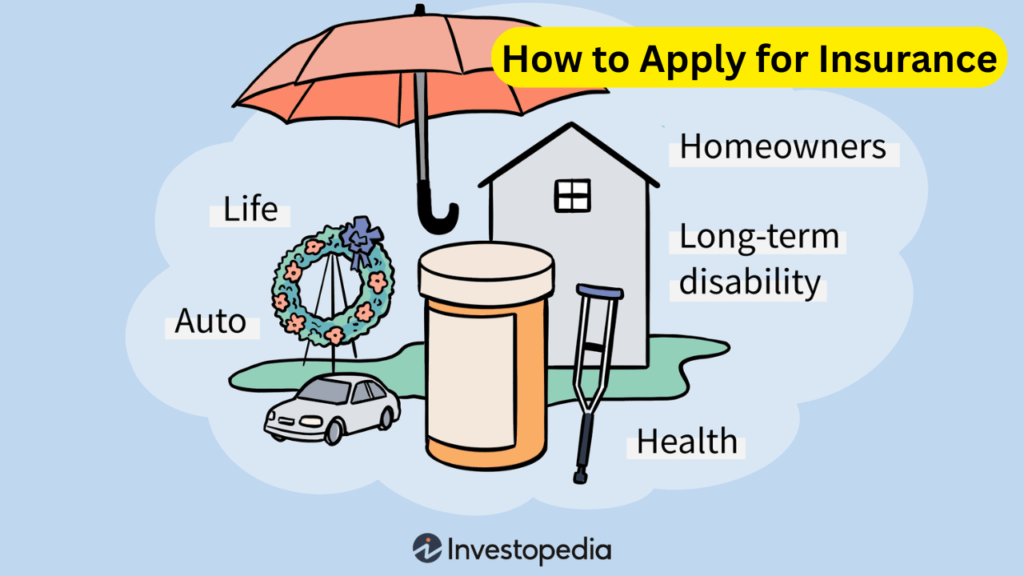
Here is a step-by-step guide to applying for an insurance policy:
Step 1: Choose the Right Policy
Research and select a policy that matches your personal or business needs.
Step 2: Compare Premiums
Use insurance comparison websites or consult a licensed agent to find the best deal.
Step 3: Fill Out the Application
Provide accurate personal, medical, and financial information in the insurance application form.
Step 4: Submit Documents
Upload or submit identity proof, address proof, income proof, and medical records (if required).
Step 5: Pay Premium
Once approved, pay your premium via net banking, UPI, credit/debit cards, or cheque.
Step 6: Policy Issuance
After verification, the policy document will be issued online or by post.
Important Dates
While insurance can be applied for year-round, here are key dates to remember:
| Event | Date |
|---|---|
| Financial Year Start | April 1 |
| Tax Saving Deadline | March 31 (each year) |
| Health Insurance Renewal Season | January – March |
| Open Enrollment (India/Global) | Varies by region/policy |
| Life Insurance Bonus Declaration | March – April |
Disclaimer
This article is intended for informational purposes only. Please consult with a licensed financial advisor or insurance expert before making any insurance decisions. The prices and features mentioned may vary by company, region, or government regulations. Always read the policy documents carefully before committing to any insurance plan.
A Complete Guide to the Insurance Sector Conclusion
The insurance sector remains a fundamental part of both personal financial planning and national economic health. Whether it’s safeguarding your life, health, vehicle, or business, insurance ensures that you are financially cushioned against life’s uncertainties. As the sector continues to evolve, with increased digitization and customer-centric innovations, policyholders now enjoy more transparency, flexibility, and choice than ever before. Niva Bupa Health Insurance – Health insurance plans
Moreover, the rise of AI-driven underwriting, instant claim approvals, and mobile app integration has brought a new level of convenience. These enhancements not only improve efficiency but also empower customers to take control of their insurance journeys. With options ranging from basic term plans to comprehensive investment-linked products, there’s something for everyone.
However, with so many policies available, it’s important to stay informed and make decisions based on your individual or business goals. Be proactive, do regular check-ins on your coverage, and don’t hesitate to seek professional advice when needed.
In a world filled with uncertainty, the peace of mind that comes from being insured is invaluable. Make insurance not just a backup plan—but an integral part of your wealth-building and protection strategy.
A Complete Guide to the Insurance Sector FAQs
1. What is the purpose of insurance?
Insurance protects individuals and businesses from financial loss due to unexpected events. It helps in transferring the risk from the insured to the insurer, ensuring peace of mind and financial stability.
2. How are insurance premiums calculated?
Premiums are calculated based on factors such as age, health, risk profile, coverage amount, tenure, and type of policy. For example, younger individuals often pay lower premiums for life insurance compared to older individuals.
3. Can I have multiple insurance policies at the same time?
Yes, you can hold multiple insurance policies. Many people have separate plans for health, life, auto, and travel. However, it’s essential to manage them carefully and avoid overlapping benefits.
4. What happens if I miss my premium payment?
Missing a payment may lead to a lapse in your policy. Most companies provide a grace period (15–30 days) during which you can still make the payment. Beyond that, coverage may be lost, and reinstating the policy could require extra documentation or penalties.
5. What is the difference between term insurance and whole life insurance?
Term insurance provides coverage for a specific period (e.g., 10, 20, or 30 years) and offers a death benefit with no maturity value. Whole life insurance, on the other hand, provides lifetime coverage and includes an investment component or cash value that grows over time.
Related Posts :






Share This Post